





Eye For Film >> Movies >> I've Seen All I Need To See (2025) Film Review


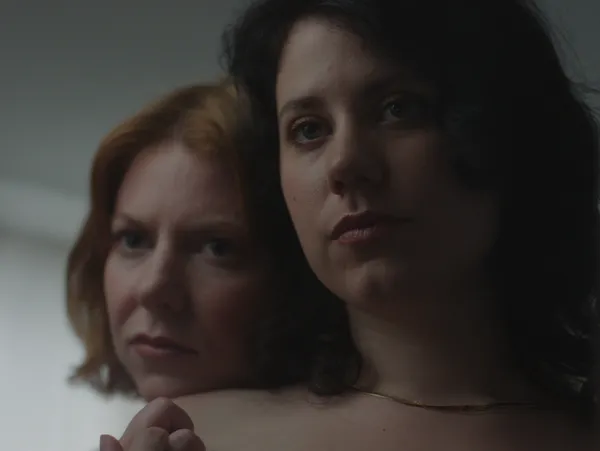

To experience deep grief is to be mired in a timeless space where it is difficult to generate any kind of momentum – a kind of emotional Sargasso Sea, where the demonstrative distress we see elsewhere in cinema is quite out of reach. It is this state which writer/director Zeshaaan Younus sets out to capture in I’ve Seen All I Need To See. To pursue it in cinema is fraught with risk. The more successful the film is, the more it alienates its audience. Even viewers who strongly relate may wish to escape from it, if only to avoid becoming stranded again themselves.
With its carefully structured use of ambient sound, its subdued colours and scarce dialogue, the film might be considered an artistic success. Whether or not it succeeds in other ways is difficult to establish. It will certainly disappoint those who come to it having been promised a thriller. Yes, there is a crime-related plot here, but it’s not edge of the seat stuff. Indeed, one rather feels that this is the point. Even before the loss that defines the film – the death of the protagonist’s sister, Indiana (Rosie McDonald) – there is a certain malaise in the air, associated with the dead end town where neither sister wants to be. Our heroine, Parker (Renee Gagner) fled the place years ago. Consequently, there is no happy place for her to find in memory, no succour from the past. This saps her energy still further.
Parker’s return, inspired by Indiana’s death, feels like a form of penance. Feeling guilty over her prolonged absence, she seeks to atone by letting herself fall into a similar trap. At least in this place, Indiana feels close. The two characters often interact, in such subtle ways that it’s not clear what is memory, what imagination and what, perhaps, something supernatural. Wisely, Younus makes no attempt to clarify what is largely beside the point. For all that these encounters trouble Parker, they offer a chance to process feelings, to begin to feel again in a way that hurts, that offers a slender connection to the real, external world.
Better than the word ‘thriller’ as a description might have been ‘mystery’, as there is a puzzle underlying this, made slippery by layers of occlusion. That to is secondary, however, to Parker’s journey. No artistic liberty is taken with the pacing of this, however. If the film does not test your patience, you should probably check your pulse. That, or aim to disconnect yourself, to become lost in Justin Moore’s melancholy cinematography. Framed as a square, the film feels compressed throughout, but is often beautiful. Slow or static shots of architectural structures are again suggestive of puzzles. They contrast with the focus on curves – not sexual but dully sensual – in the sisters’ bodies. The softness of the organic is constrained by all these straight lines, but my contrast more discernibly alive, in past or present, with some lingering potential to move, to grow, to break free.
Reviewed on: 30 Apr 2026


Director: Zeshaan Younus
Writer: Zeshaan Younus
Starring: Renee Gagner, Rosie McDonald, Sydney McCarthy, Nick Samson, John R Smith Jnr
Year: 2025
Runtime: 84 minutes
Country: US
Festivals:
Search database:
